
Uncategorized
What Are Eco Friendly Building Materials?

Apr
A house can look beautiful on the surface and still carry a heavy environmental cost underneath. The plasterboard, insulation, flooring, framing and finishes all have a footprint, and that footprint starts long before the room is painted and furnished. So when people ask what are eco friendly building materials, they are really asking a bigger question – which materials give you durability, character and performance without unnecessary waste, pollution or short-term thinking?
The answer is not one single product. Eco friendly building materials are those that reduce environmental harm across their life cycle. That can mean they are reclaimed rather than newly manufactured, responsibly sourced, low in embodied carbon, recyclable, non-toxic, long-lasting or capable of being repaired instead of replaced. In practice, the best choice depends on the project, the budget, the building type and how the material will actually be used.
What are eco friendly building materials in practice?
In real-world building and renovation, eco friendly materials tend to share a few qualities. They make sensible use of resources, avoid needless extraction where possible, and stand up well over time. A material that needs replacing every few years is rarely as green as it first appears, even if the marketing says otherwise.
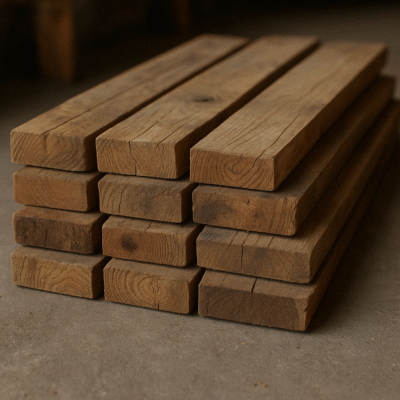
Reclaimed timber is one of the clearest examples. Instead of sending old wood from buildings, factories, yards or industrial sites into the waste stream, it is recovered, prepared and given a second life. That process preserves the energy already invested in the timber, avoids fresh felling for the same application, and often produces a more visually interesting result than brand-new boards. Grain, patina, marks of age and natural variation all add depth that modern mass-produced materials struggle to imitate.
Other eco friendly options include sustainably managed timber, natural stone with a long service life, recycled metal, clay plaster, lime-based materials, cork, sheep’s wool insulation and certain recycled-content boards. Some are better for structure, some for finishes, and some suit decorative use more than heavy-duty construction. There is no point pretending every eco material fits every job.
Why reclaimed timber matters more than ever
If you are renovating a home or fitting out an interior, timber usually plays more than one role. It may form part of the structure, create storage, line a wall, shape a staircase, become shelving or define the feel of a room. That makes the choice especially important.
Reclaimed timber stands out because it combines sustainability with substance. It is not just a worthy alternative. It is often stronger, denser and more stable than fast-grown modern softwood, particularly when sourced from older buildings where timber was cut from slower-grown trees. That older growth pattern can make a real difference in joinery, flooring and furniture-making.
Then there is the aesthetic value. A reclaimed board carries history in a way that newly machined timber does not. Knots, saw marks, weathering and tonal shifts tell their own story. For homeowners and designers trying to avoid flat, generic interiors, that authenticity is part of the appeal. The material does not need to be overworked to feel interesting. It already has character.
This is where sustainability becomes more than a box-ticking exercise. A material people genuinely love is more likely to be kept, maintained and built into a home for decades. That longevity matters.
The difference between renewable, recycled and low-impact
These terms often get grouped together, but they are not identical.
A renewable material comes from a source that can regenerate in a sensible timeframe, such as timber from a well-managed forest or cork harvested without felling the tree. A recycled or reclaimed material has already had a previous life and is being reused instead of discarded. A low-impact material may refer to low emissions during manufacture, low toxicity, local availability or reduced transport requirements.
The best eco friendly building materials often sit in more than one category, but not always. A material can be renewable and still be transported halfway across the world. It can be recycled but require a high-energy process to become usable again. It can be natural but unsuitable for a damp environment unless carefully detailed.
That is why broad claims can be misleading. It is worth asking where the material came from, how it was processed, how long it is likely to last, whether it can be repaired and what happens at the end of its life.
What to look for when choosing materials
A practical way to judge eco credentials is to think in layers rather than labels.
First, consider lifespan. Durable materials usually make better environmental sense than those that fail early or date quickly. Flooring, wall cladding, worktops and joinery all benefit from this approach. A reclaimed timber floor that wears in gracefully is a very different proposition from a cheap surface that peels, swells or ends up in a skip after a short run.
Next, consider provenance. Local or regional sourcing can reduce transport emissions and often gives you a clearer sense of where the material came from. It also supports trades and suppliers who understand the material properly. For a business rooted in reclaimed timber, local sourcing is not just a logistical detail. It is part of keeping salvage and reuse meaningful rather than treating it as a trend.
Then look at finish and treatment. A solid, honest material can quickly lose some of its environmental value if it is coated with harsh chemicals or bonded with high-emission adhesives. Low-VOC finishes, natural oils and breathable treatments are often better choices, especially in living spaces.
Finally, think about adaptability. Can the material be cut, repaired, refinished or repurposed later? Good materials should not only serve the first design idea. They should have enough integrity to evolve with the building.
Where eco friendly materials work best in the home
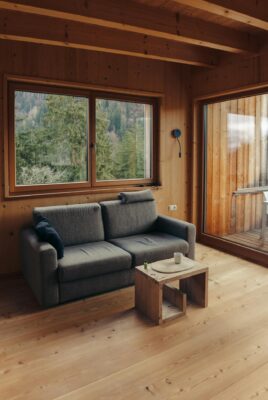
Some of the strongest opportunities are surprisingly visible. Feature walls, shelving, flooring, stair details, loft boards, panelling and custom furniture all allow eco friendly materials to become part of the room’s identity rather than being hidden behind finishes.
Reclaimed timber is particularly effective here because it performs on two levels. Structurally, it is dependable when properly prepared for the intended use. Visually, it brings warmth and depth that softens modern spaces and enriches period homes. In open-plan kitchens, home offices, boot rooms and loft conversions, that balance of practicality and character is hard to beat.
For smaller projects, hardwood offcuts and salvaged boards can also be a smart route. They reduce waste, cost less than full bespoke pieces and still offer enough quality for shelves, side tables, planter boxes, workshop projects or decorative touches. Eco choices do not have to begin with a full house renovation.
The trade-offs people should know about
Not every eco friendly building material is simple to specify. Some cost more upfront. Some require specialist installation. Some need a little flexibility in appearance because natural and reclaimed products are rarely uniform.
Reclaimed timber, for example, may vary in tone, width or surface texture. For many people that is exactly the point, but it does mean you need to embrace variation rather than fight it. Planning also matters. If you need a perfectly identical finish across a huge area at short notice, reclaimed stock may require more careful sourcing.
There can also be a difference between what is best environmentally and what is best for a specific technical demand. A bathroom, utility room or heavily insulated extension may need moisture management, ventilation and detailing that affect which materials are suitable. Good sustainable building is not about forcing one material into every situation. It is about making informed decisions.
Why the most sustainable choice is often the one with staying power
Fashion has a waste problem. Materials chosen purely because they are on trend tend not to age well in people’s minds, even if they hold up physically. The result is premature replacement, and that undermines any green claim attached to the original product.
Timeless materials work differently. Reclaimed wood, natural stone, well-made joinery and honest finishes do not beg for attention, but they reward long-term living. They gather wear in a way that feels natural rather than shabby. They settle into a property and make it feel rooted.
That is one reason reclaimed timber remains such a compelling answer to the question of what are eco friendly building materials. It reduces waste, makes use of existing resources, offers excellent longevity and adds genuine visual richness. It is practical enough for everyday use and distinctive enough to shape a whole interior.
At Kay Allan Timber Merchants, that belief sits at the heart of the material itself – wood with history, ready to become part of a home again rather than ending its life as waste.
If you are choosing materials for a renovation or build, it helps to look past the sales language and ask a simpler question: will this still be useful, beautiful and worth keeping in ten or twenty years’ time? Very often, that is where the right answer begins.
